


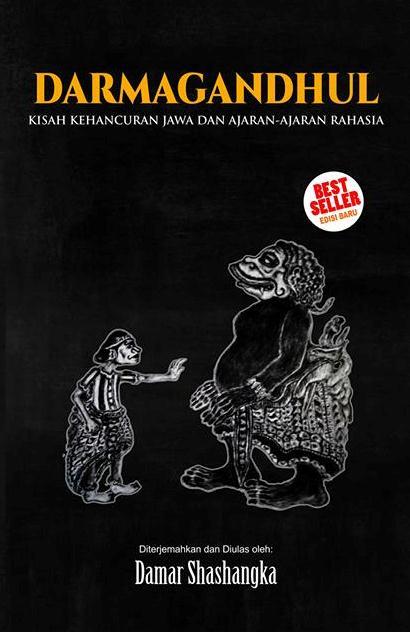
Sêrat Darmagandhul stands as one of the most provocative and fiercely debated literary works to emerge from Java during the late nineteenth and early twentieth centuries. Formatted as a collection of sung poetic verses known as Macapat, this ancient text captures a profound philosophical dialogue between a spiritual master, Kiai Kalamwadi, and his inquisitive disciple, Darmagandhul. Throughout their exchange, Kiai Kalamwadi unveils the long-guarded secrets surrounding the tragic fall of the Majapahit Empire and the subsequent religious transformation of Java from Shiva-Buddhism to Islam. These esoteric insights and historical accounts were bequeathed to Kalamwadi by his teacher, Raden Budi, explicitly intended to serve as a vital lesson for future generations seeking to understand their cultural lineage.
The narrative crafted within Darmagandhul portrays the twilight of Majapahit as a period marked by intense political betrayal and existential grief. It recounts how the legendary empire was brought to ruin through a military campaign launched by the Demak Sultanate under the command of Raden Patah, also known as Senapati Jimbun—who was, ironically, the biological son of King Brawijaya V himself. This dramatic dynamic highlights the chaotic clash of political allegiance and shifting religious paradigms during this transitional era. Amidst the rising tide of war, Syekh Siti Jenar emerges as a solitary, unyielding figure of spiritual authority who openly rejects Demak’s military aggression against Majapahit, an act of defiance that ultimately results in his execution.
Ever since its initial publication in the early twentieth century, Sêrat Darmagandhul has ignited fierce historiographical disputes among scholars, cultural historians, and theologians alike. Certain commentators have interpreted the text as a candid, uncensored record of historical realities during Java’s religious transition, whereas others dismiss it as mere satirical fiction born out of cultural resistance against the rapid expansion of Islam. This polarising reception has historically left the manuscript vulnerable to biased interpretations, often weaponised or discredited depending on the ideological stance of its readers.
This analytical work by Damar Shashangka undertakes an objective, scholarly examination of Sêrat Darmagandhul, stripping away emotional bias and sectarian prejudice. Rather than accepting the manuscript’s claims at face value or dismissing them entirely as heresy, the author applies a rigorous critical lens to place the text within a balanced socio-historical context. Through careful translation and critical annotations, the book invites readers to evaluate how this controversial piece of Javanese literature interacts with the broader historical reality of the Indonesian archipelago.
At the heart of Shashangka’s methodology is a comprehensive cross-examination of the manuscript’s claims against primary historical evidence. The author systematically juxtaposes the events described in Darmagandhul with authentic historical artifacts, including ancient stone inscriptions, Old Javanese kakawin poems, classical babad chronicles, foreign records such as Chinese annals, and oral traditions preserved across Java and Bali. This meticulous historical triangulation effectively illuminates the boundaries between actual historical events and the deliberate political allegories embedded within the text.
Beyond its historiographical scrutinisation, the book dedicates substantial attention to unpacking the intricate mystical doctrines woven into the conversations between Kalamwadi and Darmagandhul. Shashangka dissects these esoteric teachings through a comparative framework, evaluating them across three distinct spiritual paradigms: Islamic Sufism, Shiva-Buddhism, and Javanese mysticism, known as Kejawen. This tripartite analysis reveals a sophisticated syncretic dialogue, illustrating how diverse metaphysical concepts influenced and challenged one another during Java’s era of profound transformation.
Ultimately, the text contextualises Sêrat Darmagandhul as an invaluable psychological document and socio-cultural reflection of the Javanese populace enduring a epochal shift in power and faith. The sharp satire and controversial rhetoric within the manuscript are framed as cultural expressions reacting to radical societal upheaval. Consequently, the book encourages readers to engage with classic literature maturely and critically, free from emotional dogma or religious antagonism.